
Direct answer: A battery storage RFQ should define the operating profile, the electrical and site interfaces, the performance guarantee and its test method, and the scope boundary between suppliers before a price is requested. Leading with the duty case, outage duration, ambient range, grid configuration and acceptance tests produces quotes that can be compared. A price received without these inputs is a budget number, not an engineering proposal.
Asking for a price too early is the most common procurement mistake in battery storage. When the request does not fix the load, the interfaces or the acceptance method, each supplier makes different assumptions, and the returned prices describe different systems. The result is a comparison of numbers that were never intended to be compared.
This guide lists what belongs in the request before a price is asked. It is a planning reference for an international commercial or industrial purchase; every project must still be reviewed against the local grid code and the supplier’s engineering scope.
Start with the operating profile
The supplier cannot select or size a system without knowing what it must do. Provide the measured load data as time-stamped interval data, the required critical load, the outage duration to be supported, and the daily or seasonal cycling pattern. State whether the system is for backup, peak shaving, demand-charge control, self-consumption or a combination of services.
Describe the worst case, not only the average. A facility may average 180 kW but draw 420 kW for a motor start or a production shift. The RFQ should tell the supplier the highest sustained power, the longest outage and the coldest starting temperature, because those conditions drive the design more than the annual energy total.
Define the electrical and site interfaces
Ambiguity at interfaces is where projects stall and costs appear after award. Specify the grid voltage, phase configuration, earthing arrangement, available fault level and transformer size. State whether export is permitted and whether the utility imposes limits on power injection or requires specific control behavior.
For the site, describe indoor or outdoor installation, the available footprint, access for delivery and lifting, floor loading, flood and seismic exposure, and any separation or fire-protection requirements that apply locally. Ask each supplier to mark the exact boundary where their scope ends and another supplier’s scope begins, including cables, control signals, protection settings and commissioning.
Request a performance guarantee and its test method
A useful guarantee states the power and energy the system must deliver, at what temperature, at the beginning and end of the service period, and how it will be tested. A number without these conditions is not verifiable. Request the test procedure, instrumentation, allowed uncertainty and the definition of the alternating-current measurement point.
Separate a standard or design rule from a certification. Ask for the exact standards, report references, revisions and scope that apply to the proposed configuration, and request the evidence for each. A product designed to a standard is not the same as a product certified against it, and the RFQ should ask which is which.
Fix scope, delivery and acceptance boundaries
List the deliverables the price must include: the battery and enclosures, the power conversion system, controls and energy management software, transformer and switchgear where applicable, transportation, installation, commissioning, documentation and training. If any of these sit outside the quote, require the supplier to say so explicitly rather than assuming the boundary.
Define acceptance in advance. A factory acceptance test plan, a site test plan and the witness points belong in the RFQ so both sides know when the system is accepted. Include the documents required at handover, such as the single-line diagram, protection settings, test reports, operating manuals and the spare-parts list.
Where responsibilities are shared between suppliers, assign each interface explicitly in the request so there is no gap between the battery, the power conversion system and the switchgear.
A review checklist before the request is sent
Use the checklist below as a final pass. A missing item rarely kills the project, but it usually returns later as a price change or a schedule delay.
| Area | What the RFQ must state | Why it matters |
|---|---|---|
| Duty case | Interval load data, critical load, autonomy, cycling | Determines power, energy and service |
| Grid interface | Voltage, phases, fault level, export limits | Sets protection and conversion design |
| Site constraints | Footprint, access, environment, separation | Affects enclosure and layout |
| Performance | Guarantee values, conditions and test method | Makes the offer verifiable |
| Scope boundary | Deliverables, interfaces and exclusions | Prevents post-award surprises |
| Acceptance | Factory and site tests with witness points | Defines completion and handover |
Send the same checklist to every supplier and require the same format of response. Consistency in the request is what makes the responses comparable, far more than any single technical feature.
Compare like with like after the responses arrive
When the quotes return, normalize them onto one table. Check that each supplier quoted the same autonomy, the same end-of-life capacity, the same scope boundary and the same acceptance tests. Where they differ, ask for the assumption in writing. A lower price that assumes a narrower scope is not a saving; it is a smaller system.
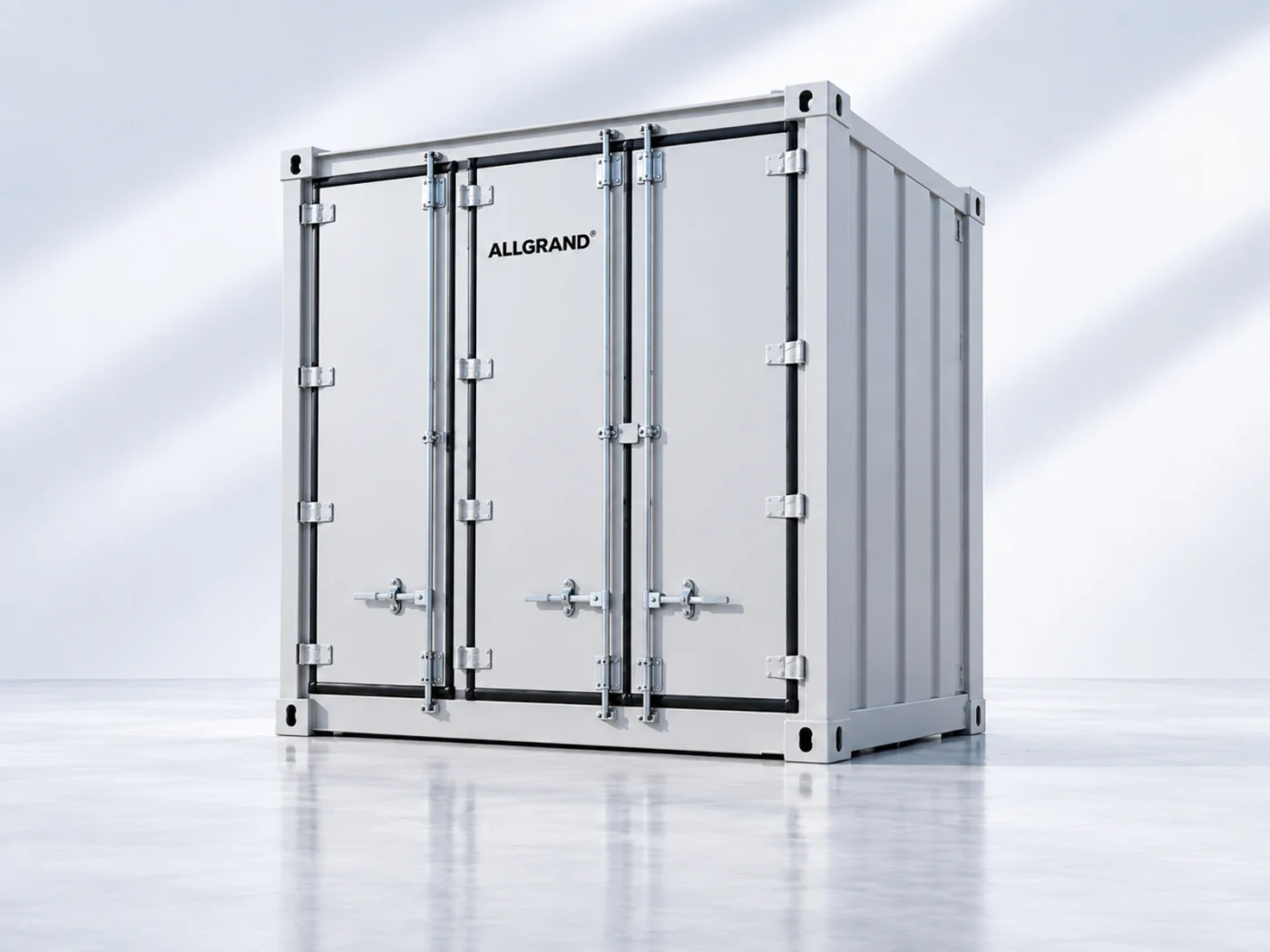
For a reference of the product range a request can describe, review the AllGrand product family and the 1044 kWh containerized energy storage system. Buyers who need custom configuration can include the OEM and ODM support path in the request where it applies. Every configuration must still be confirmed by engineering review for the site.
Frequently asked questions
Why should I not ask for a price first?
Because each supplier will assume a different duty case, scope and test method, and the prices will describe different systems. Fixing the operating profile, interfaces and acceptance tests first is what makes the returned numbers comparable.
What is the single most useful document to attach?
The time-stamped interval load data with the critical-load list. It lets the supplier see the peak power, the energy requirement and the cycling pattern, which together drive the sizing more than any single capacity figure.
How do I compare a cheaper quote with a more expensive one?
Normalize both onto the same autonomy, end-of-life capacity, scope boundary and acceptance tests. Where the assumptions differ, ask for them in writing; a lower price that assumes less scope is not an equivalent offer.
Is a design-to-standard the same as certification?
No. A product designed to a standard is not automatically certified against it. The RFQ should ask for the exact standards, report references, revisions and scope that apply to the proposed configuration and the evidence for each.
What to send for a technical review
Send the site location, interval load data, critical-load list, outage duration, grid configuration, ambient-temperature range and available footprint to the AllGrand engineering team. The team can review the scope and assumptions before the request is finalized.
Read more energy storage engineering guides from AllGrand. AllGrand Group has manufactured batteries since 1987 and supplies energy storage systems, lead-acid batteries and battery cells to customers in more than 100 countries. Project specifications and certification scope must be confirmed for the actual site and configuration.
Sources and further reading
- U.S. Department of Energy — Solar Energy and Storage Basics
- NREL — Storage Futures Study
- EPRI — Energy Storage research
These sources were used to verify general energy-storage procurement concepts. The RFQ structure, checklist and comparison guidance are original AllGrand editorial work.