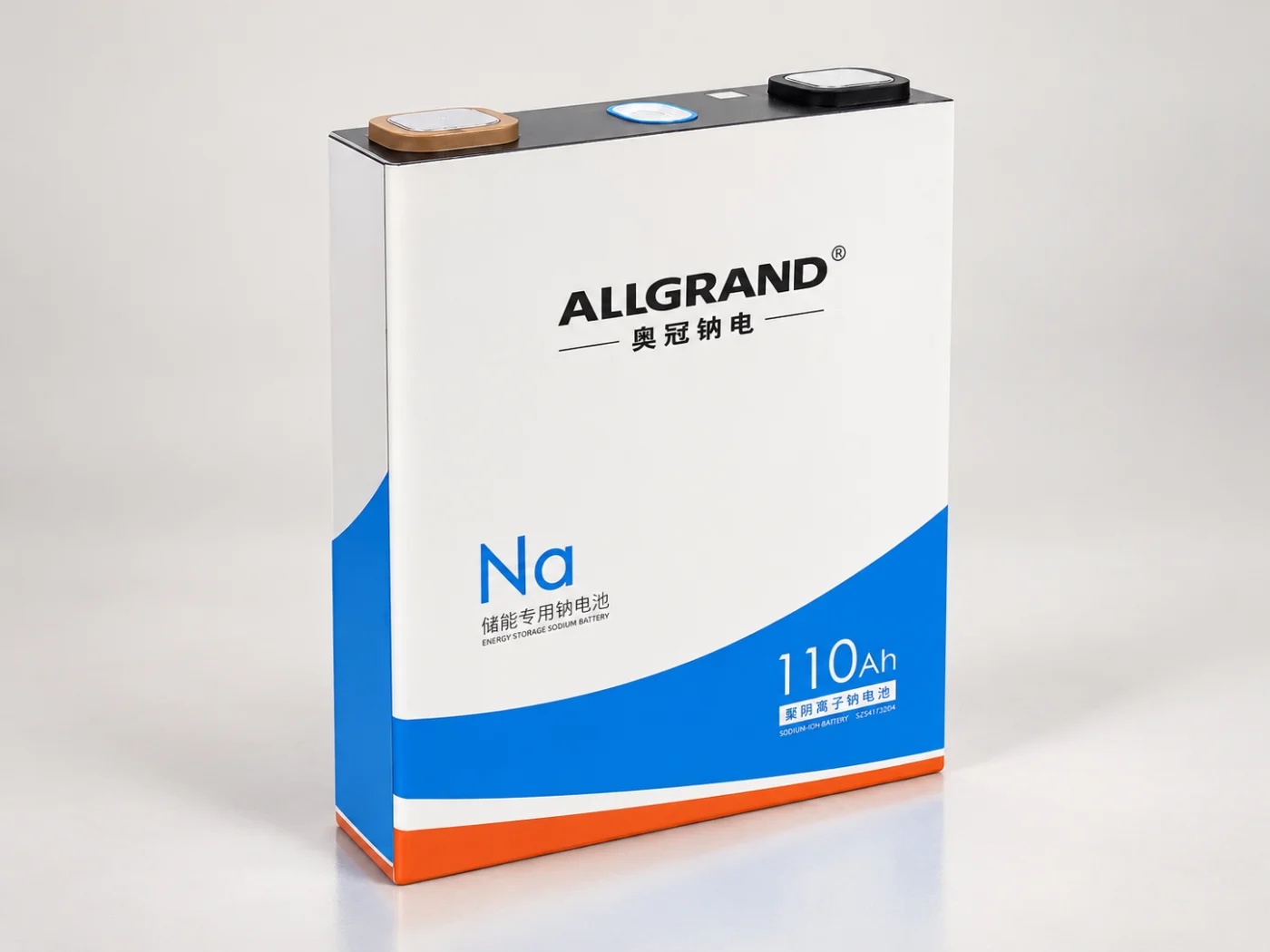
The 110 Ah sodium-ion cell in its low-temperature grade: ≥90% of rated capacity at -20 °C and charge capability down to -20 °C.
02Overview

Product · Technical data
The 110 Ah sodium-ion cell in its low-temperature grade: ≥90% of rated capacity at -20 °C and charge capability down to -20 °C.
Model-specific price, datasheet and lead time. Engineering reply within one business day.
Preliminary figures from the current brochure. Final configuration and performance are confirmed in the quotation.
02Overview
The 110 Ah sodium-ion cell in its low-temperature grade: ≥90% of rated capacity at -20 °C and charge capability down to -20 °C.
03Key features
04Specification
| Parameter | Value |
|---|---|
| Battery type | Sodium-ion, low-temperature grade (prismatic, aluminium shell) |
| Model | 54173204-110Ah (low temperature) |
| Nominal voltage | 2.85 V |
| Nominal capacity | 110 Ah |
| Rated current | 0.5C (51 A) |
| Low-temperature discharge capacity | ≥ 90% of rated capacity at -20 °C (0.5C discharge) |
| Low-temperature charge | 0.1C at -20 °C to 3.4 V, then constant voltage to 0.05C |
| Low-temperature first-cycle capacity | 80% of rated capacity |
| Dimensions | 54 × 173 × 204 mm (T × W × H) |
| Weight | 3.3 kg ±0.1 kg |
| Maximum charging voltage | 3.4 V |
| Minimum discharge voltage | 1.5 V |
| Maximum continuous charge current | 2C (15 – 45 °C, cut-off 3.2 V) |
| Maximum continuous discharge current | 3C (0 – 60 °C) |
| Maximum pulse charge current | 3C (10 s, ≤80% SOC) |
| Maximum pulse discharge current | 8C (5 s, ≥30% SOC) |
| Energy density, mass | ≥ 95.0 Wh/kg |
| Energy density, volume | ≥ 164.5 Wh/L |
| AC internal resistance | < 0.40 mΩ (fresh cell) |
| Monthly self-discharge | ≤ 5% per month |
| Rest SOC | ≥ 5% SOC |
| Storage temperature | -20 – 45 °C (≤ 1 month) · 20 – 35 °C (≤ 6 months) |
| Operating altitude | ≤ 2000 m |
| Company certification | ISO 9001 · ISO 14001 · ISO 45001 |
Figures are taken from the current AllGrand product brochure. Specifications are indicative and may be revised without notice — confirm with our engineers before ordering.
Applications & selection
Compare sodium-ion cells against the full system requirement
06Downloads
Products
 01
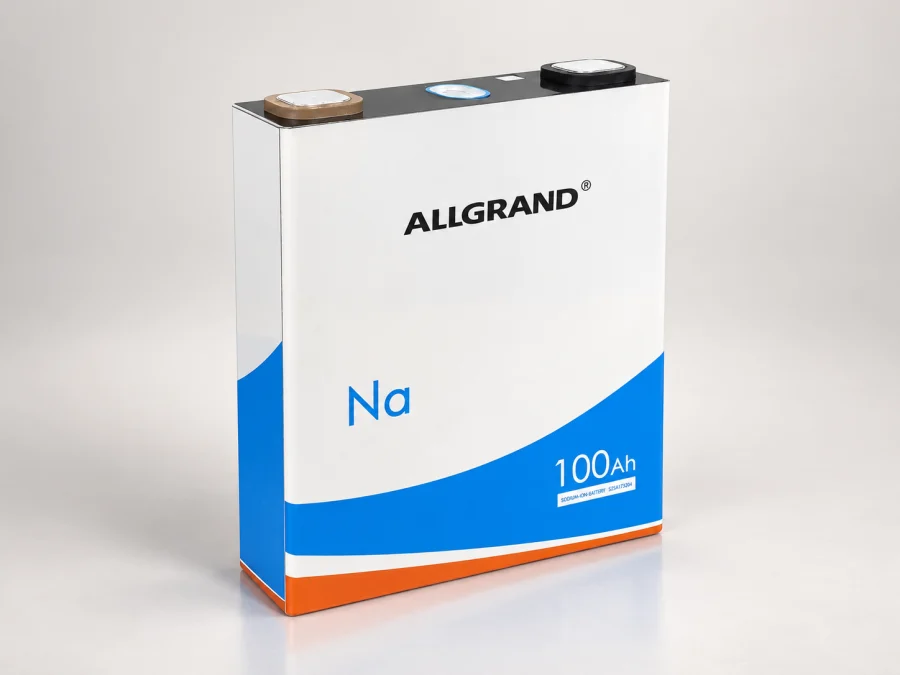
Sodium-Ion Prismatic Cell 100 Ah (GN100-54173204)
A 2.85 V prismatic sodium-ion cell rated 100 Ah, with ≥97% energy efficiency and stable performance at low…
View page
 02
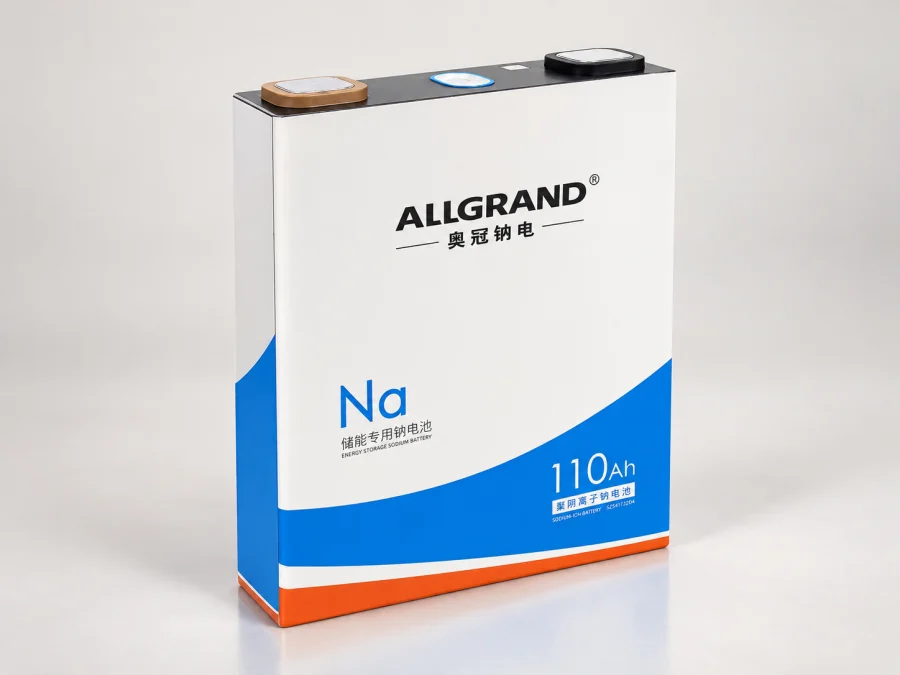
Sodium-Ion Prismatic Cell 110 Ah (54173204-110Ah)
A 2.85 V prismatic sodium-ion cell rated 110 Ah, with higher energy density than the 100 Ah cell…
View page
 03
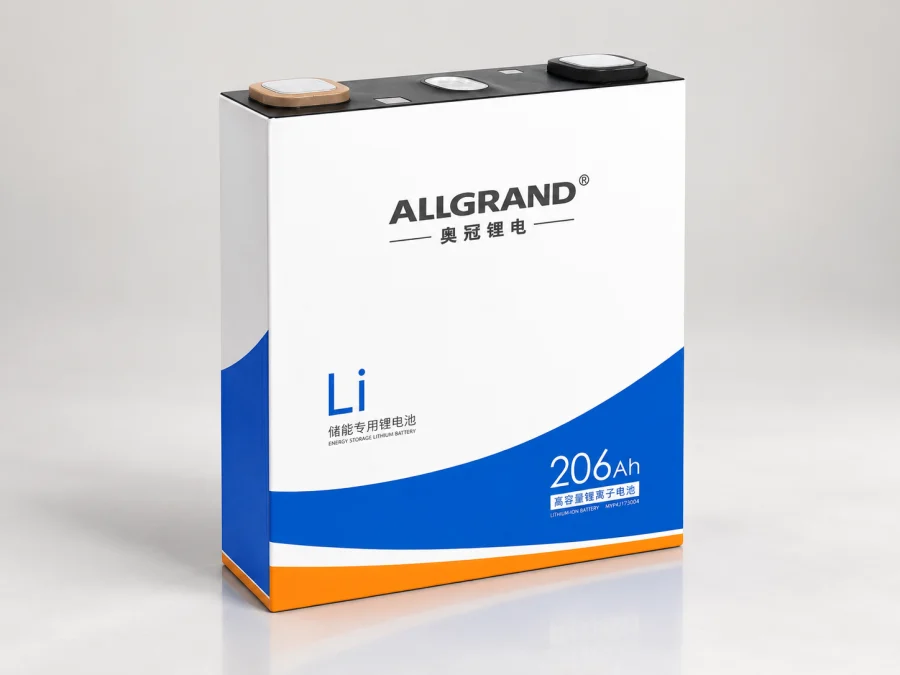
LFP Prismatic Cell 206 Ah, Energy Storage
A 3.2 V 206 Ah LFP prismatic cell tuned for energy storage, with ≥165 Wh/kg and long calendar…
View page
Send us the application, nominal voltage and capacity target. Our engineers will specify the battery and system architecture around it.