
Direct answer: Battery storage fire safety should be judged on evidence, not a label. Confirm which standards the exact product was tested to, request the full fire test report and its test configuration, and verify that the supplier’s separation, detection and suppression requirements match NFPA 855 and the local authority having jurisdiction. A report that covers a different enclosure or configuration does not prove your project is protected.
A battery energy storage system can carry a certification and still need site-specific fire protection review. The certification confirms a defined scope of testing, while the installation review confirms that the system, as installed, meets the applicable code and the project’s risk profile.
This guide separates the evidence a buyer should ask for from the marketing language that often surrounds it. It is a procurement reference, not a fire engineering design. Installation decisions must be confirmed by the authority having jurisdiction and the project engineer.
Separate certification from fire test evidence
Certification and fire test evidence answer different questions. A system listing such as UL 9540 confirms the energy storage system was evaluated against a defined safety standard. A fire test report such as UL 9540A documents how a specific configuration behaved under a specific thermal runaway test.
A buyer should ask for both and keep them separate. A listing without a fire test report leaves open how fire propagates through the enclosure. A fire test report without a listing leaves open whether the tested unit matches the product being sold. Together they describe what was tested and what was certified.
Keep the two documents in the purchase file and check that the model numbers on both match the proposal. A mismatch between the listed system and the tested unit is one of the most common gaps in a fire safety review.
Understand what UL 9540 covers
UL 9540 is a system-level standard for energy storage systems and equipment. It addresses electrical, mechanical, thermal and fire-related hazards within a defined scope. The listing applies to a specific system and its documented components.
When reviewing a UL 9540 listing, ask which model, enclosure and configuration it covers. A listing for one cabinet size does not automatically extend to a different cabinet or to a container assembled with different modules. The exact product and scope must be documented in the listing.
Ask for the listing directory entry or certificate number and confirm it is current. A certificate that has lapsed, or one issued to a predecessor model, does not describe the system on the current quotation.
Request the UL 9540A report, not a pass label
UL 9540A is a test method that characterizes thermal runaway propagation. The report shows the test configuration, the cell and module types, the conditions, and the measured results across cell, module, unit and installation levels.
A useful report tells you how far a thermal event propagated, the temperatures and gas behavior observed, and whether the tested configuration stayed within its enclosure. Ask whether the tested unit matches the exact modules, spacing and enclosure you are buying.
A summary that says the system passed without the configuration details is not enough for an engineering decision. Request the full report or a technical summary with the test matrix, and have a qualified reviewer read the unit-level and installation-level sections rather than only the conclusion.
Review installation requirements under NFPA 855
NFPA 855 sets installation requirements for energy storage systems, including separation distances, maximum stored energy, fire protection and the role of the authority having jurisdiction. The applicable edition and any local amendments matter.
A system that passes its tests still has to be installed with the required separation, access and protection. Bring the site layout, the system’s energy content and the local code edition to the design review so the installation can be checked against the code rather than assumed.
Because adoption varies by location, do not treat a code section from another jurisdiction as applicable to the project. Confirm the edition and amendments with the authority having jurisdiction early, since separation and access requirements can change the site layout and the total energy that can be placed in one area.
Verify detection and suppression as a system
Fire safety is a system, not a single device. Ask how the system detects an early thermal event, what suppression or containment it uses, how it isolates a faulty section, and how it communicates an alarm to site staff.
Confirm that detection and suppression were tested together, not only as separate components. A gas detection loop, a smoke or heat detector, and a suppression agent all have to work with the enclosure’s venting and airflow to be effective. The supplier should be able to describe that integrated behavior with test or engineering evidence.
Also review the emergency response sequence. The design should state how a fault is isolated, how doors and venting behave during an event, and what information is available to first responders. A clear, documented response path is part of the fire safety package, not an afterthought.
| Evidence item | What it shows | Red flag |
|---|---|---|
| UL 9540 listing scope | The exact system model and components covered | Listing is for a different enclosure or module set |
| UL 9540A test report | Propagation behavior at cell, module, unit and installation levels | Summary only, with no test configuration |
| Detection and suppression design | How early events are detected and contained | Components described but not tested together |
| NFPA 855 installation review | Separation, access and protection for the actual site | No site-specific code review |
Use this checklist during supplier evaluation and again at design review. If any row cannot be answered with a document, ask for it before the purchase decision closes.
Frequently asked questions
Is a UL 9540 listing enough to prove fire safety?
A UL 9540 listing confirms a defined scope of safety evaluation, but fire propagation evidence comes from the fire test report and the installation review. Ask for all three and keep them separate.
What should a UL 9540A report include?
It should include the test configuration, the cell and module types, the conditions, and measured results at cell, module, unit and installation levels. A pass summary without those details is not enough.
Does NFPA 855 apply to my site?
Adoption and any amendments depend on the jurisdiction. Confirm the applicable edition and local amendments with the authority having jurisdiction before finalizing separation and protection requirements.
How do I verify detection and suppression work together?
Ask for engineering or test evidence that covers detection, suppression and the enclosure’s venting and airflow as one integrated system, not as isolated components.
What to send for a technical review
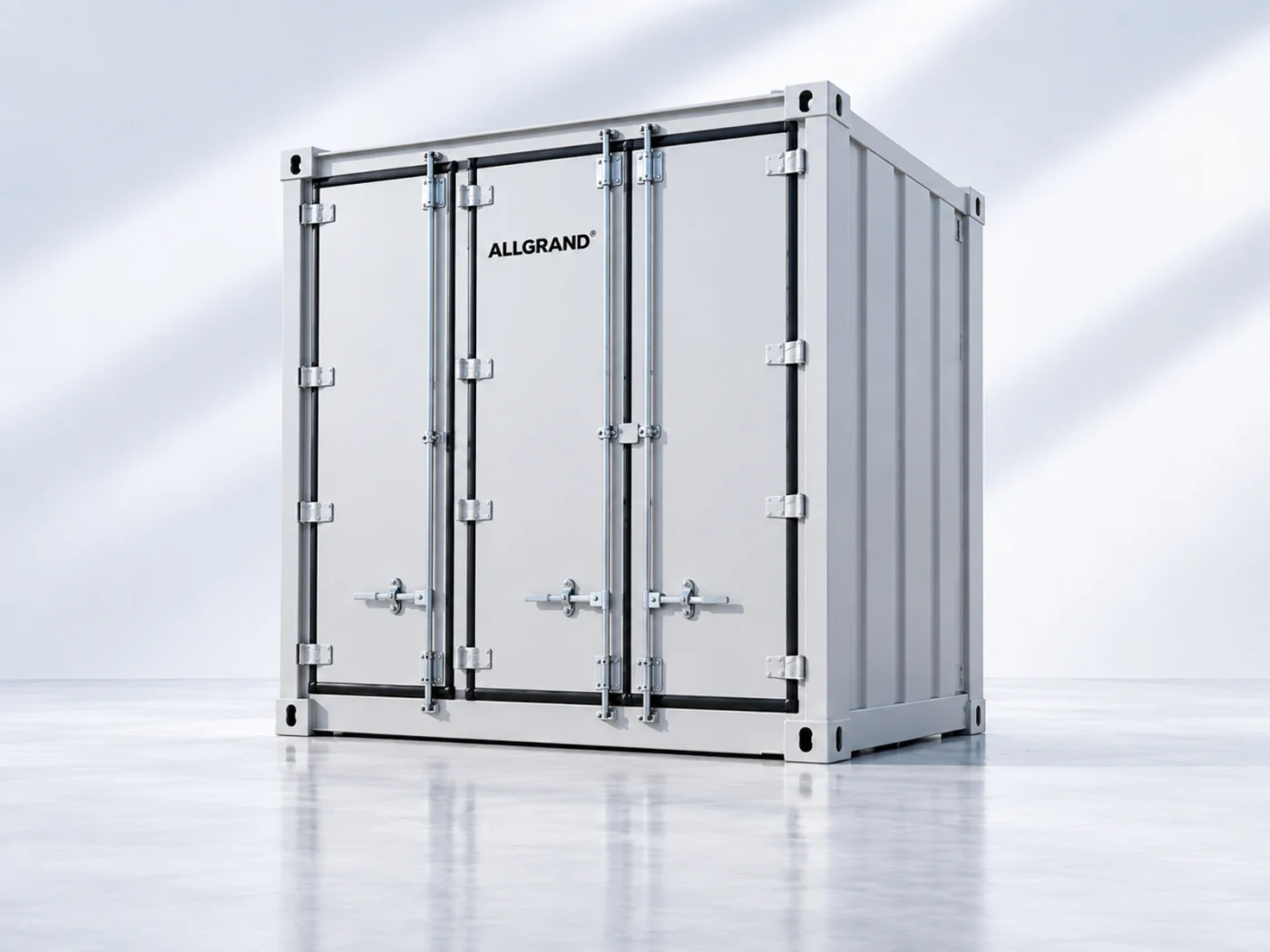
Send the product model, the listing scope, the fire test report, the site layout and the applicable code edition to the AllGrand engineering team. The team can review how the 1044 kWh containerized energy storage system fits your site requirements. Read more battery storage guides. AllGrand Group has manufactured batteries since 1987 and supplies energy storage systems and batteries to customers in more than 100 countries. Project requirements must be confirmed by engineering review.
Sources and further reading
- UL Solutions – Energy Storage
- NFPA 855 – Energy Storage System Safety
- Sandia National Laboratories – Energy Storage
These sources were used to verify general fire safety, certification and installation concepts. The checklist and evaluation order are original AllGrand editorial work.