
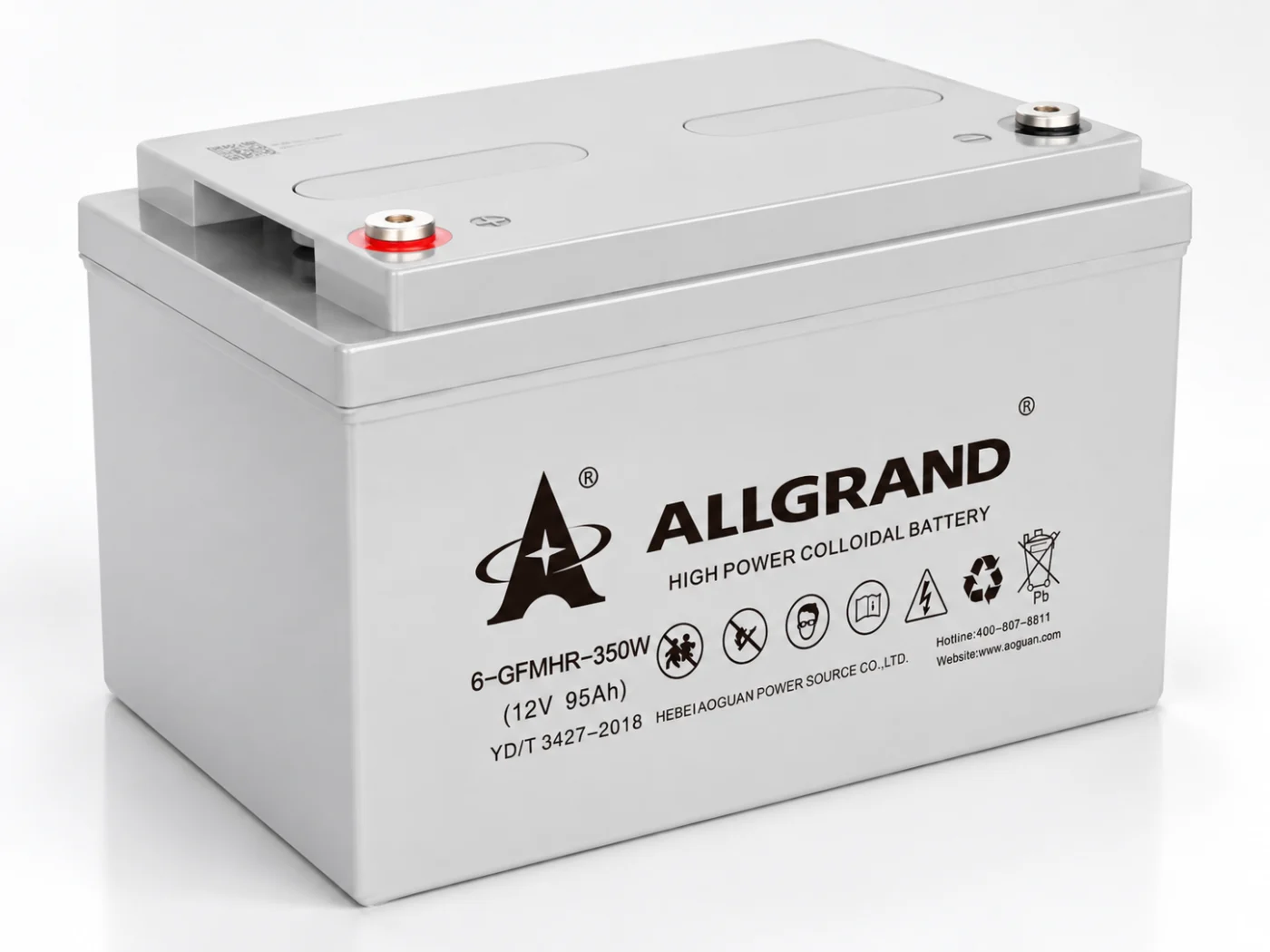
Direct answer: Telecom backup battery selection starts with required autonomy, site temperature and the actual discharge rate, then works back to chemistry and size. Define the load, the longest credible outage and the end voltage, apply the site’s high and low temperature extremes, and choose a battery that meets that duty without overbuilding. Amp-hours alone answer nothing because the same cell delivers different capacity at different rates and temperatures.
A telecom site is often remote, hot or cold, and powered by an unreliable grid or a generator. The battery only earns its place during an outage, but it ages every day, and its service life is set by the environment it sits in.
This guide gives a selection path for tower sites, small exchanges and similar backup duties. It is a planning reference; the final battery must be confirmed against the equipment’s actual load and the site’s measured temperature range.
Start with autonomy, not amp-hours
Autonomy is the time the battery must carry the load during an outage, and it is the first number to fix. From the load in watts and the autonomy in hours you can find the energy needed, then convert it into a battery size with the discharge rate, end voltage and temperature correction applied.
Amp-hours are only meaningful once the discharge rate and end voltage are fixed. A battery rated for a 20-hour discharge delivers a different, lower figure at a 2-hour telecom load, so comparing two products by amp-hours alone can pick the wrong one.
Write the autonomy requirement as a range with the longest credible outage, not a single optimistic number. A site that loses grid power through an overnight storm has a very different requirement from one with a generator that starts in minutes.
Temperature at the site sets service life
The site temperature is often the largest hidden factor in telecom battery life. High ambient temperature accelerates corrosion and water loss in lead-acid batteries and shortens service life even when the battery is not cycling, while very low temperature reduces available capacity and can limit charging.
Measure the actual cabinet or shelter temperature, not a regional average. Equipment shelters can run far hotter than the outside air because of the rectifiers and other heat sources inside.
Choose a battery whose specified operating and lifetime temperature range covers the measured extremes, and record the expected service life at that temperature rather than at a bench-top value. If the site cannot be cooled, the battery must be selected for the heat it will actually see.
Match the discharge rate to the load
The discharge rate changes how much energy a battery can deliver. At a high discharge rate, voltage falls faster and the usable capacity is lower than the nameplate figure, so the battery must be sized from the rate that matches the telecom load.
Take the actual load current and the required autonomy, and select a battery whose published discharge table meets the load at that duration and end voltage. A high-rate battery is designed for short, heavy discharges and will behave differently from a battery sized for a long, light discharge.
Confirm the end voltage the telecom equipment needs. Selecting for a higher end voltage than the equipment requires can oversize the battery, while a lower end voltage may risk the equipment shutting down before the battery is exhausted. Read the discharge table at the site temperature too, because both capacity and voltage response shift with temperature.
Choose chemistry for the duty cycle
Lead-acid and lithium batteries suit different duties. A lead-acid battery is a proven choice for occasional backup where the site sees few deep cycles, while a lithium battery can tolerate more cycles and offers higher energy density, which matters when space or weight is limited.
The decision should follow the duty cycle, the temperature range and the service plan, not a single metric. A remote site with a few outages a year and a simple rectifier may be well served by a lead-acid block, while a site that cycles frequently or has space limits may justify lithium.
Compare the total cost over the expected life, including the service visits a given chemistry needs. The cheapest first cost is not the same as the lowest cost over a ten-year or fifteen-year service window.
Plan monitoring and service reach
A remote battery is only as good as the monitoring and service behind it. Choose a battery that can report voltage, temperature and state of charge to the network operations center, so a failing block is found before an outage instead of during one.
Match the battery to the service network. A battery that needs frequent equalization or inspection visits is a poor fit for a site that is expensive to reach, so factor service frequency into the selection.
Keep a record of installation date, site temperature and measured performance so replacement can be planned from condition rather than a calendar guess. A condition-based replacement plan uses the battery fully without waiting for a failure.
| Input | Question to answer | Effect on selection |
|---|---|---|
| Autonomy | Longest credible outage | Sets required energy |
| Site temperature | Measured extremes | Sets service life and sizing |
| Discharge rate | Load current and duration | Sets usable capacity |
| Duty cycle | Cycles per year | Guides chemistry choice |
| Service reach | Visit cost and frequency | Guides monitoring needs |
Fill in the matrix before comparing products. When two batteries look similar on paper, the one that fits the measured temperature range and the real outage duty is the safer choice.
Frequently asked questions
Why are amp-hours alone not enough for telecom batteries?
Amp-hours only mean something at a fixed discharge rate, end voltage and temperature. A telecom load discharges faster than the rating condition, so the usable capacity is lower and the battery must be sized from the actual duty.
How much does temperature shorten telecom battery life?
High temperature accelerates aging even when the battery is not cycling, so service life falls as the shelter temperature rises. Size and select from the measured site temperature, not a bench-top value.
When should a telecom site choose lithium over lead-acid?
When the site cycles frequently, space or weight is limited, or the duty and service plan favor lithium’s energy density and cycle tolerance. Compare total cost over the service life rather than first cost alone.
What end voltage should I size for?
Use the end voltage the telecom equipment requires and the autonomy needed. A higher end voltage than the equipment needs oversizes the battery, while a lower one can let the equipment shut down early.
What to send for a technical review
Share the load profile, the longest credible outage, the measured shelter temperature range and the space available with the AllGrand engineering team. The team can review the standby gel battery and the lithium battery range for the site. Read more battery selection guides. AllGrand Group has manufactured batteries since 1987 and supplies batteries to customers in more than 100 countries. Final sizing must be confirmed by engineering review.
Sources and further reading
- U.S. Department of Energy – Storage Basics
- PNNL – Energy Storage
- Clean Energy Council – Battery Advice
These sources were used to verify general battery and energy storage concepts. The selection matrix and autonomy method are original AllGrand editorial work.