
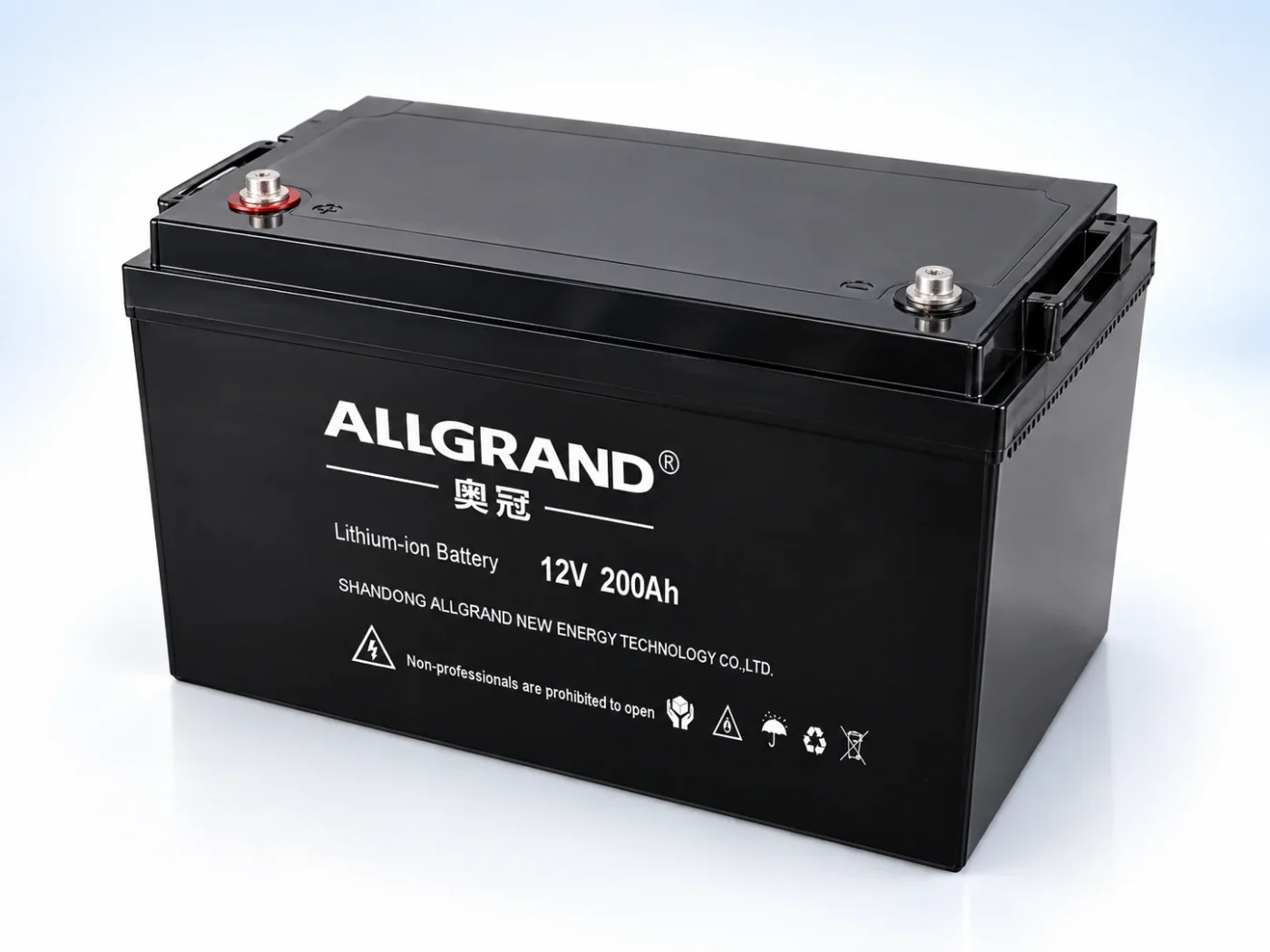
Direct answer: Lead-acid and LFP batteries suit different commercial backup duties. Lead-acid is typically lower in upfront cost, mature and simple to service, but heavier, larger and less tolerant of deep or frequent cycling and high temperature. LFP is lighter and more compact, tolerates deeper and more frequent cycling, and usually costs more upfront. Choose by cycling duty, ambient temperature, available space, monitoring needs and lifecycle cost, not by chemistry label alone.
The lead-acid versus LFP question is often framed as an argument about which chemistry is better. For a commercial backup system the useful question is different: which chemistry matches the duty, the site and the service plan. A standby system that discharges rarely and sits on float has very different needs from a system that cycles daily for peak shaving.
This guide compares the two against the factors that decide commercial backup projects. It is a planning reference; capacity, life and warranty values must be confirmed with the supplier for the actual duty cycle and site.
Start with duty, not chemistry labels
Backup systems divide into standby duty and cycling duty. Standby duty keeps the battery near full charge for long periods and discharges only during an outage. Cycling duty discharges and recharges regularly, often daily, to shift load or reduce demand charges. The same chemistry behaves differently in the two cases.
Lead-acid has a long history in standby float service and remains common where the battery sits charged for months and is tested periodically. LFP is favored where the battery cycles often or where partial state-of-charge operation is part of the control strategy. Matching the chemistry to the duty avoids paying for capability the site will not use, or accepting a limitation the site cannot tolerate.
Cycling and depth of discharge
Frequent and deep cycling favors LFP. LFP chemistry is generally more tolerant of deep discharge and partial state-of-charge operation, and it typically delivers more usable cycles over a project’s life than lead-acid under the same cycling depth. Lead-acid is more sensitive to deep cycling and to being left in a partial state of charge, which can accelerate capacity loss.
For a rarely cycled standby system, this difference matters less. If the battery discharges only a few times per year, the cycling advantage of LFP contributes little, and the comparison shifts to cost, space and temperature. The cycle count that actually occurs at the site is the input that decides this line of the matrix.
The cycle count should come from measured or scheduled operation, not from a generic assumption, because standby and cycling duty lead to different choices.
Temperature and footprint
High ambient temperature shortens lead-acid life and can require derating, while LFP generally tolerates a wider operating range with less derating at moderate temperatures. In hot plant rooms or outdoor enclosures, the thermal environment can outweigh the purchase price difference. Cold conditions affect both chemistries and must be checked against the charging limits of each.
Footprint and weight favor LFP. LFP systems are more compact and lighter for the same stored energy, which matters in basements, rooftops and existing switch rooms. Lead-acid requires more floor area and structural allowance, and its weight can add to installation cost and access planning.
Monitoring, BMS and service
LFP systems rely on a battery management system to control charging, balancing and protection. That electronics layer adds cost and a software and firmware dimension to the service plan, and it must be maintained over the system’s life. Lead-acid is simpler electrically and often easier for a general electrical team to inspect and service with standard tools.
The service question is therefore not only about the cells. It includes who can diagnose the system, what spares are held, how long a replacement module takes to arrive and whether the monitoring data is accessible to the owner. A simpler chemistry can still carry a complex service burden if the surrounding system is not well documented.
| Factor | Favors lead-acid | Favors LFP |
|---|---|---|
| Duty cycle | Rare discharge, long float | Frequent or deep cycling |
| Temperature | Moderate, controlled room | Wider or hotter range |
| Footprint | Plentiful floor space | Compact or weight-limited |
| Upfront cost | Lower first cost | Higher first cost |
| Service model | Simple electrical service | BMS and data service |
Use the matrix as a first filter, then price each shortlist over the expected service life rather than at purchase. The cell chemistry is one input among several; the complete system, enclosure and service scope decide the outcome.
Cost over life, not purchase price
Lead-acid often has the lower purchase price, but replacement cycles, labor, floor space and temperature control add cost over time. LFP often has the higher purchase price, with a longer interval between major replacements and lower maintenance in the right duty. The correct comparison adds these future costs to the first cost using the site’s actual duty.
Do not rely on a generic cycle-life claim to make the decision. Ask each supplier for the life expectation at the site’s depth of discharge, temperature and cycle frequency, and for the capacity that must remain at end of life. Those conditions, not a headline number, drive the comparison.
For reference, AllGrand supplies lead-acid battery products for standby and industrial duty alongside the lithium energy storage product family, and offers lead-to-lithium replacement batteries where a site upgrades within an existing footprint. Each path must be confirmed by engineering review for the site and duty.
Frequently asked questions
Which is cheaper for a standby backup that never cycles?
Lead-acid is often cheaper upfront and well suited to rare-discharge float duty, which is why it remains common there. Compare the full lifecycle cost including replacement, labor and any temperature control before deciding on first cost alone.
Is LFP always the better long-term choice?
Not always. LFP’s cycling and space advantages matter most where the system cycles often or space is constrained. A rarely cycled standby system in a controlled room may be served well by lead-acid at a lower first cost.
Can I replace lead-acid with LFP in the same cabinet?
Sometimes, using a purpose-built replacement product, but the charging profile, protection and any monitoring must be reviewed. The voltage window and control settings differ, so the upgrade requires engineering confirmation rather than a direct swap.
What should I ask suppliers to compare fairly?
Ask for the life expectation at the site’s depth of discharge, temperature and cycle frequency, plus the end-of-life capacity and the test method. Those conditions, not a generic cycle-life claim, are what make the two chemistries comparable.
What to send for a technical review
Send the site location, expected daily cycles, outage duration, ambient-temperature range, available footprint and any existing battery or charging equipment to the AllGrand engineering team. The team can review which chemistry and configuration fit the duty.
Read more energy storage engineering guides from AllGrand. AllGrand Group has manufactured batteries since 1987 and supplies energy storage systems, lead-acid batteries and battery cells to customers in more than 100 countries. Life and warranty values must be confirmed for the actual duty cycle and site.
Sources and further reading
- U.S. Department of Energy — Solar Energy and Storage Basics
- NREL — Storage Futures Study
- PNNL — Energy Storage explainer
These sources were used to verify general energy-storage concepts. The decision matrix, comparison factors and lifecycle guidance are original AllGrand editorial work.