
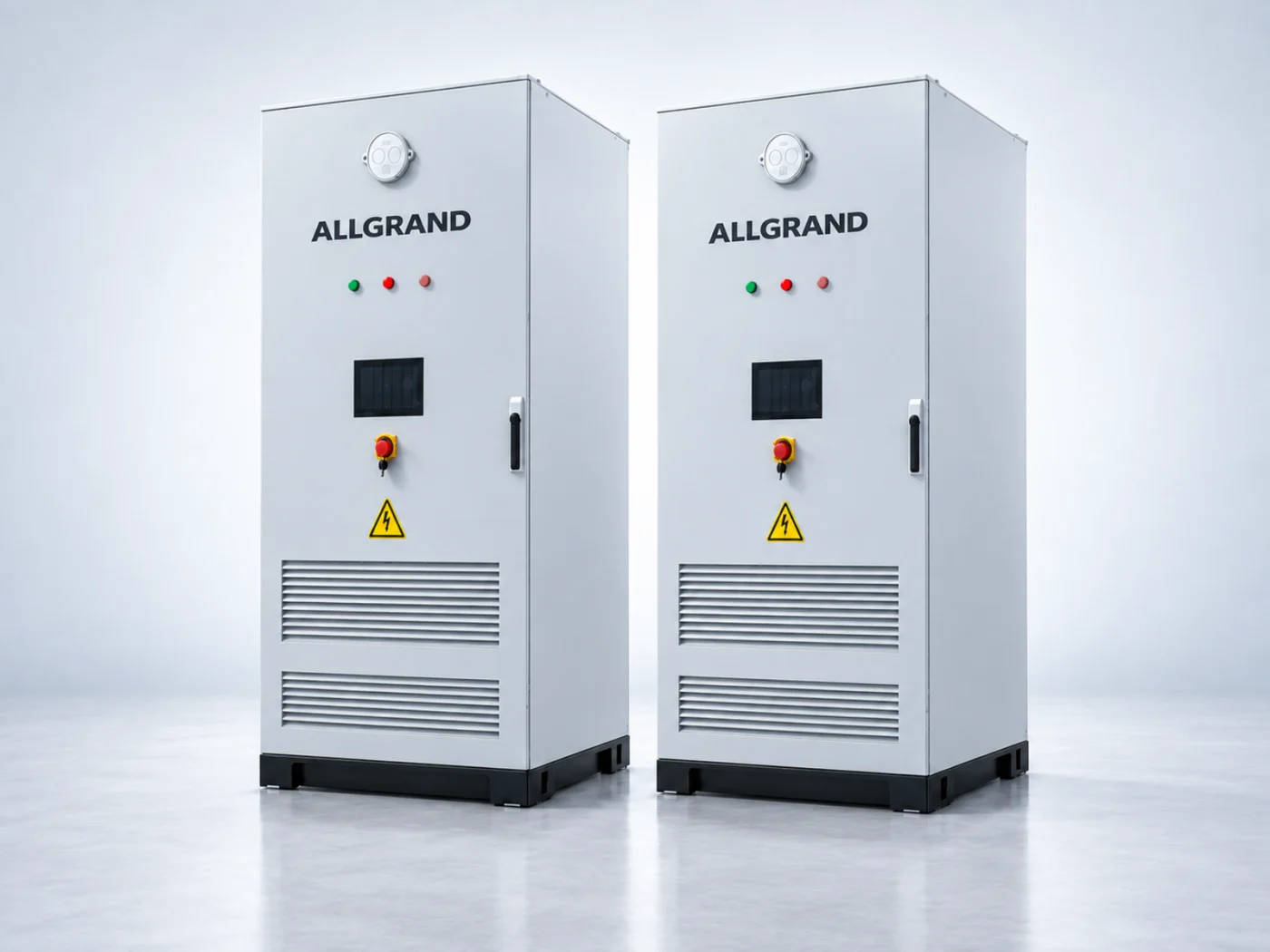
Direct answer: When a BESS floods with alarms, do not clear the codes. Freeze the event log, confirm the time synchronization, and trace the cascade back to the first event in the sequence. One primary fault usually triggers many consequence alarms, and the first event points to the repair that matters. Clearing everything without reading the order destroys the only evidence of the root cause.
A battery energy storage system reports faults from many layers at once: the battery management system, the power conversion system, the thermal system and the energy management system. A single trip can ripple through all of them, so the operator sees a wall of alarms rather than a single cause.
This guide gives a method for reading that wall in order. It is a maintenance reference; the shutdown and restart procedures must follow the documentation for the installed system.
Freeze the event log before clearing
The event log is the only record of what happened and in what order. Export or save it before clearing anything, because a later reset can overwrite or rotate older entries and lose the sequence that matters.
Capture more than the alarm list: the timestamps, the parameter values at each event, and any state transitions. The sequence of events, not just the set of codes, is what separates a primary fault from its consequences.
If the system supports it, pull the logs from every subsystem, not only the battery management system. The first event may be recorded in one controller while the others only show the cascade that followed.
Check time synchronization first
A cascade can only be traced if every controller shares the same clock. If the subsystems are not time synchronized, their logs interleave out of order and the first event is impossible to identify reliably.
Confirm the time source and the offsets across the battery management system, the power conversion system and the energy management system before reading the sequence. A few seconds of drift can put the cause after its own effect in the merged log.
Fix the time synchronization as a standing maintenance item, because it also affects event correlation, capacity records and the quality of any remote diagnosis the supplier performs later.
Trace cascading alarms to the first event
Start from the earliest timestamp in the merged log and work forward. The first event is usually a hard fault, while the alarms that follow are reactions: a contactor opens, a converter loses the DC link, a cooling loop reports a flow drop, and the energy management system flags a communication loss.
Map each later alarm to the first event it plausibly follows. A battery undervoltage that appears after a converter trip is a consequence of that trip, not an independent battery fault, even though both are in the alarm list.
Where two events share the same timestamp, use the parameter values and the physical order of the system to decide which one could have caused the other. The goal is a single causal chain, not a list of every code. When the merged log is large, filter out the steady-state messages and focus on the transition records, because the first fault is a change from normal to abnormal.
Separate cause alarms from consequence alarms
Label each alarm as either a cause or a consequence. A cause alarm is a condition the system can act on directly, such as an insulation fault, an overcurrent or a thermal event. A consequence alarm is the downstream result, such as a communication loss after a subsystem shut down.
This separation changes the repair. Fixing a consequence alarm without addressing the cause clears the symptom and leaves the fault to return, often worse. The first cause is what the maintenance action should target.
Write the cause and consequence labels into the maintenance record so the next alarm flood can be read faster. A standing map of how the installed system cascades is one of the most useful documents a site can keep.
Review protection and restart conditions
Before restarting, confirm that every protection condition has actually cleared and that the restart is authorized by the procedure. A cascade can hide a latched fault that only resets after a manual inspection.
Check the restart sequence the way commissioning did: verify the DC link, the communication paths and the protection settings before energizing again. A hasty restart turns a recoverable fault into a repeat event.
After the restart, watch for the same first fault to reappear under load. If it does, the repair did not reach the root cause and the full sequence should go back to the supplier with the preserved logs.
| Time | Subsystem | Alarm | Label |
|---|---|---|---|
| First event | PCS | DC overvoltage | Cause |
| After first | BMS | Contactor open | Consequence |
| After first | Thermal | Coolant flow drop | Consequence |
| After first | EMS | Communication loss | Consequence |
Use this worksheet against the actual log. The pattern in the example is illustrative; the real labels must follow the installed system’s architecture and the observed timestamps.
Build a standing cascade map
After the first flood is resolved, turn what was learned into a standing map of how the installed system cascades. List the primary faults the site has seen, the alarms that follow each one, and the restart conditions that apply, and keep the map next to the operating procedure.
A standing map lets the next operator read a new flood in minutes instead of hours, and it gives the supplier a faster starting point for remote diagnosis. Update the map whenever a new first fault appears or the system configuration changes. A complete map also makes handover to a new operator safer and faster.
Frequently asked questions
Why should I not clear a BESS alarm flood immediately?
Clearing the codes destroys the event order that reveals the first fault. Export the log first, then trace the cascade, because the earliest event points to the repair that matters.
How does time synchronization affect fault finding?
If the controllers do not share one clock, their logs interleave out of order and the cause can appear after its own effect. Confirm the time source before reading the merged sequence.
What is a consequence alarm?
It is a downstream reaction to a primary fault, such as a communication loss after a subsystem shuts down. Fixing a consequence without the cause leaves the fault to return.
When is it safe to restart after an alarm flood?
Only after every protection condition has cleared, the restart is authorized, and the DC link and communication paths are verified. Then watch for the same first fault to reappear.
What to send for a technical review
Send the exported event logs, the time synchronization status and the alarm sequence to the AllGrand engineering team. The team can review the cascade against the 522 kWh liquid-cooled energy storage cabinet. Read more BESS maintenance guides. AllGrand Group has manufactured batteries since 1987 and supplies energy storage systems to customers in more than 100 countries. Fault handling must follow the installed system’s procedures.
Sources and further reading
These sources were used to verify general energy storage reliability and safety concepts. The cascade mapping method and worksheet are original AllGrand editorial work.