
Direct answer: Battery storage temperature derating is the reduction in available power or energy that happens when cells operate outside their rated temperature window. High temperatures limit sustained power to protect the cells, and low temperatures reduce usable capacity and slow charging. Because the effect is large, the site ambient profile must be an input to sizing, and the system’s thermal limits must be checked against it, not assumed away.
A nameplate kilowatt and kilowatt-hour rating is measured under defined conditions, usually a moderate ambient temperature and a defined current. A battery rarely sees those exact conditions in service. Temperature moves the voltage, the internal resistance and the allowed current, so the same battery delivers different performance in a desert than in a cold mountain site.
This guide explains how temperature changes performance and how to carry the effect through a sizing calculation. It is a planning reference; the actual charge and discharge limits must be taken from the documentation for the chosen product and confirmed by engineering review.
Why temperature changes capacity and power
Battery chemistry is temperature sensitive. At low temperatures, the electrolyte and the internal reactions slow down, the internal resistance rises, and the available capacity drops. At high temperatures, the reactions speed up and heat builds faster, so the battery management system must limit current or reduce the state-of-charge window to keep the cells within a safe temperature band.
Both effects reduce what the system can do. The important point for sizing is that the reduction is not a small rounding error. In a cold climate the delivered energy can fall by a meaningful fraction, and in a hot climate the sustained power may be limited during the hottest hours, which are often exactly when a commercial site needs the battery.
Use the ambient profile, not a single number
A single design temperature is not enough. A site with an annual average of 20 degrees Celsius may still reach 40 degrees in the afternoon and below zero at night in winter. Sizing should use the hottest expected operating hour and the coldest expected operating hour, not the annual mean, because the battery has to work at those extremes.
Gather the local ambient data, the installation type and whether the system is indoors or outdoors. An outdoor cabinet in direct sun adds its own thermal load, while an indoor room with poor ventilation can trap heat. The location of the system is part of the thermal profile.
Indoor installations need the room’s temperature profile, including solar gain on the building and the ventilation capacity. Outdoor cabinets should be modeled with the manufacturer’s stated ambient operating range and any sun-shield assumptions, because shading changes the temperature the cells actually experience.
Charge limits are usually tighter than discharge limits
Charging is often more restricted than discharging because charging at low temperature can deposit lithium unevenly and because charging at high temperature adds heat faster than it can be removed. The manufacturer typically publishes a reduced charge current below a low-temperature threshold and a reduced charge power above a high-temperature threshold.
When a site charges the battery at night and discharges during the day, the cold-night charge limit can set the recharge time, which in turn limits how much energy is available the next day. This interaction belongs in the dispatch model rather than being treated as a separate footnote.
Thermal management reduces but does not remove derating
Liquid cooling or forced air keeps cells closer to their ideal band and narrows the spread between cells, but it consumes energy and has its own limits. In extreme ambient conditions the thermal system may not hold the cells at the rated temperature, so some derating remains. The derating curve the manufacturer publishes already assumes the thermal management is operating as designed.
When comparing products, ask for the derating behavior at the site’s actual ambient extremes, not only the headline rating at standard conditions. A product that holds more power at 40 degrees Celsius may be a better fit for a hot site even if the nameplate ratings look similar.
Carrying derating through the sizing calculation
The sizing calculation should apply the derating to both power and energy. Start with the required load in kilowatts and the required energy in kilowatt-hours, then divide by the temperature derating, the round-trip efficiency, the allowed depth of discharge and the end-of-life margin. The order matters less than using all of the factors consistently.
| Factor | Typical effect | Where it comes from |
|---|---|---|
| Temperature derating | Reduces power and capacity | Manufacturer curve |
| Round-trip efficiency | Loss between charge and discharge | Manufacturer or test |
| Depth of discharge | Limits the usable window | Product design |
| End-of-life margin | Reserves for capacity fade | Project assumption |
As an illustrative example, if the load needs 100 kWh delivered and the combined derating and losses total 20 percent, the installed capacity must be about 125 kWh before any end-of-life margin. The exact figure depends on the product and the site, and the final size must be confirmed by engineering review.
Aging and derating are related but not the same
High temperature also accelerates calendar aging, so a hot site faces two costs at once: the immediate derating and faster long-term capacity fade. The end-of-life margin should reflect the expected temperature history over the project life, not only the initial derating. A cooler installation can reduce both effects, which is why site ventilation and shade are design decisions with real financial value.
Separating the two keeps the model honest. Derating describes what the battery can deliver today at a given temperature; aging describes how that capability declines over time under the same conditions. For a long-life project, a cooler location can therefore reduce the total installed capacity needed across the asset life, because less derating and less fade must be covered.
Frequently asked questions
What is battery temperature derating?
It is the reduction in available power or energy when cells operate outside their rated temperature window. High temperatures limit sustained power, and low temperatures reduce capacity and slow charging.
Should I size for the hottest or coldest hour?
Size for the extremes the system must actually serve, not the annual average. Use the hottest expected operating hour for power limits and the coldest expected hour for capacity and charge limits.
Does liquid cooling remove the need to derate?
It reduces the temperature spread and keeps cells closer to their ideal band, but it does not remove the limits in extreme ambient conditions. The manufacturer’s derating curve already assumes the thermal system is operating.
How does temperature affect battery life?
High temperatures accelerate calendar aging in addition to causing immediate derating. A hot site should carry a larger end-of-life margin and benefit more from ventilation and shade.
What to send for a technical review
Share the site location, the hottest and coldest expected operating hours, the installation type and the required power and energy with the AllGrand engineering team. The team can review the product derating curve against the site profile.
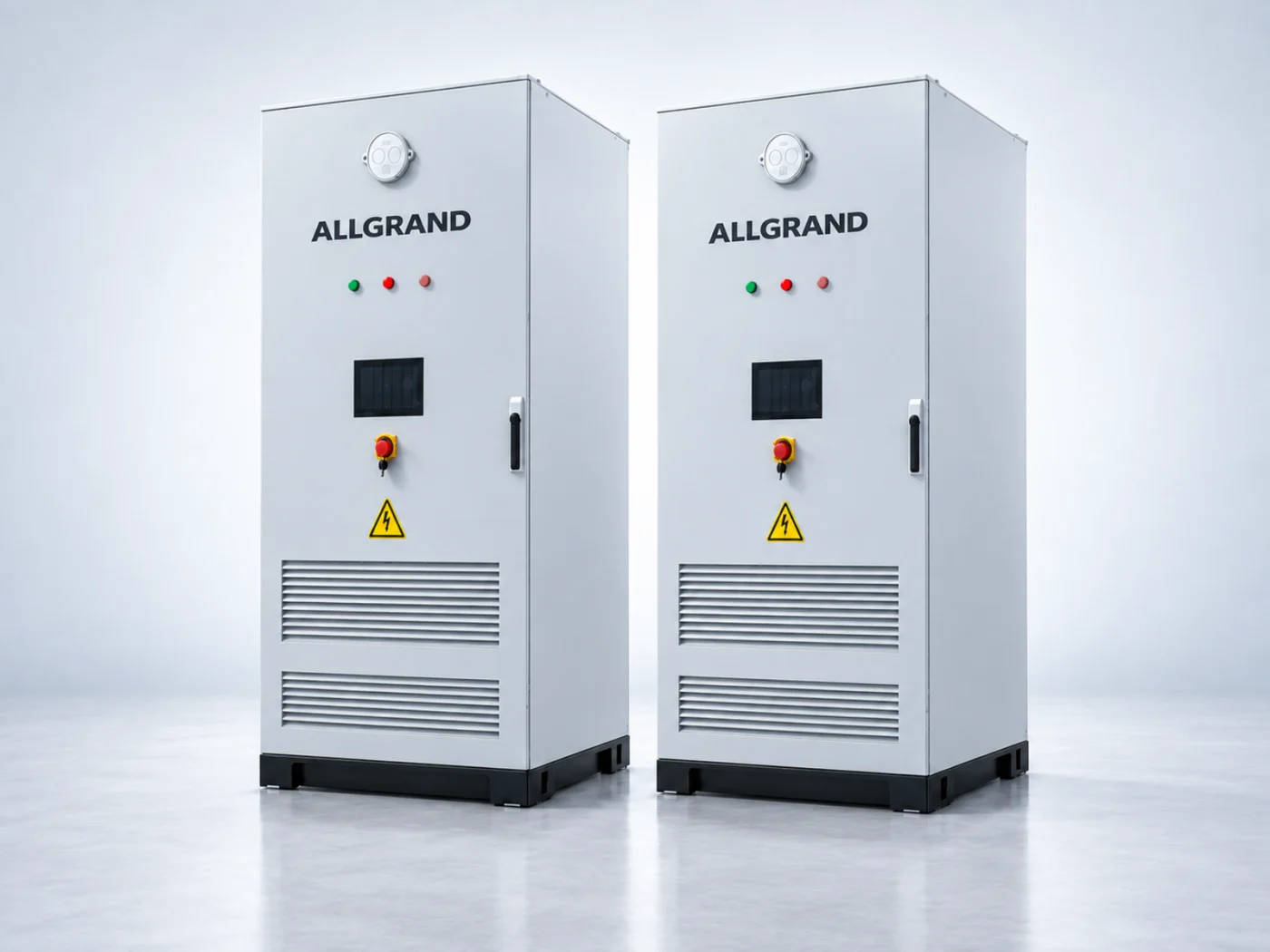
Review the 261 kWh liquid-cooled energy storage cabinet and the lithium energy storage product family, or read more battery storage engineering guides. AllGrand Group has manufactured batteries since 1987 and supplies energy storage systems, lead-acid batteries and cells to customers in more than 100 countries. Final sizing must be confirmed for the actual product and site.
Sources and further reading
These sources were used to verify general battery thermal and sizing concepts. The derating checklist and worked example are original AllGrand editorial work.